
For beginners, aim for an electronic drum kit with mesh heads, a proper hi-hat pedal and a module with a metronome and practice exercises. Expect to spend around 400 to 1,000 Swiss francs for a kit that will last you several years.
The big advantage of an electronic kit is that you play it with headphones, so you hardly disturb anyone. But between models at 300 francs and those over 3,000, the differences aren’t obvious. In this article, our drum teachers explain what really matters, and what can wait.
Why choose an electronic drum kit?
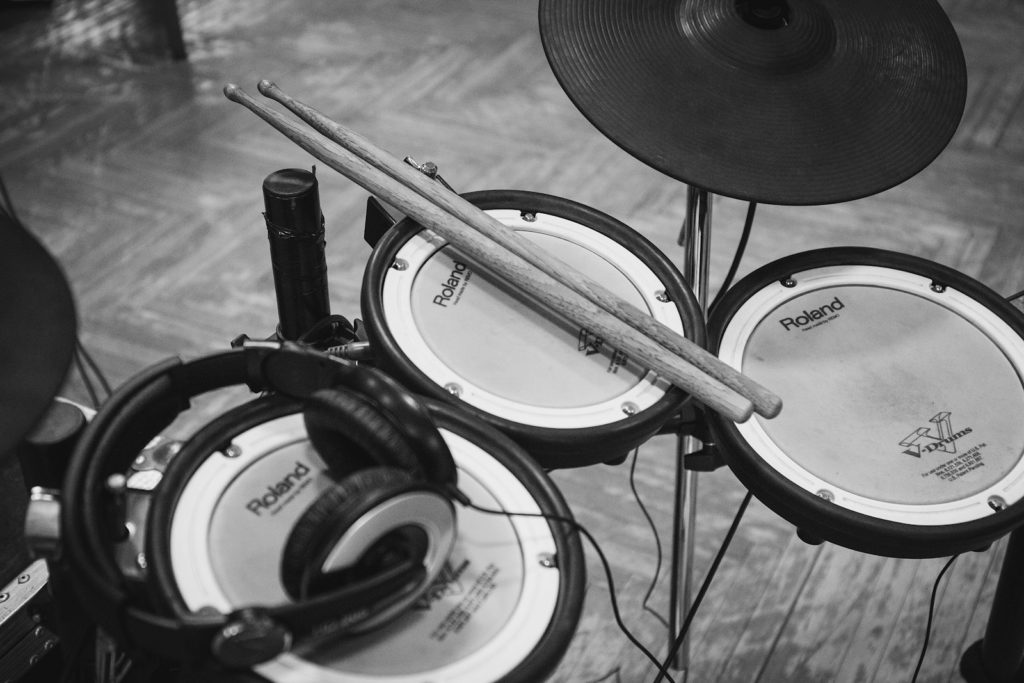
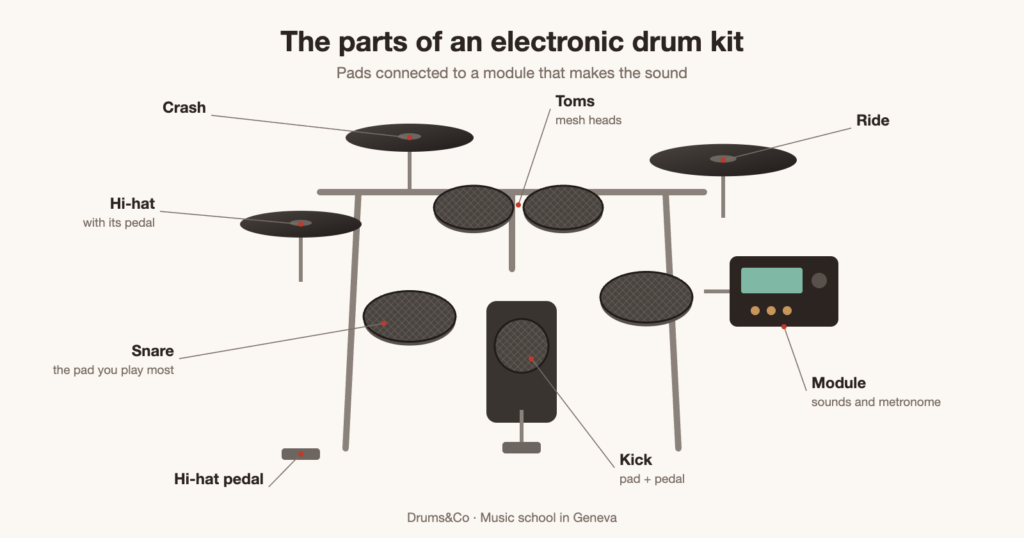
An electronic kit replaces drums and cymbals with pads connected to a module: the module makes the sound, through headphones or a speaker.
The advantages:
- You control the volume. With headphones, you can play in the evening without waking the whole house.
- It takes up less space than an acoustic kit, and some models fold away.
- The module helps you progress: built-in metronome, exercises, recording, and playing along to your favourite songs via Bluetooth or cable.
- Dozens of sounds: rock, jazz, electronic, percussion, at the push of a button.
The limits to know before buying:
- The feel is still different from a real kit, especially on cymbals and entry-level models.
- It isn’t silent: strokes on the pads and especially the kick pedal make noise and vibrations (more on this below).
- Dynamics are more limited: playing loud or soft, on the edge or in the centre, is less faithfully reproduced on small models.
That’s why we recommend playing an acoustic kit regularly too, for example in lessons or in our practice rooms.
The 5 features that really matter
1. Heads: mesh or rubber
This is the most important feature for playing comfort.
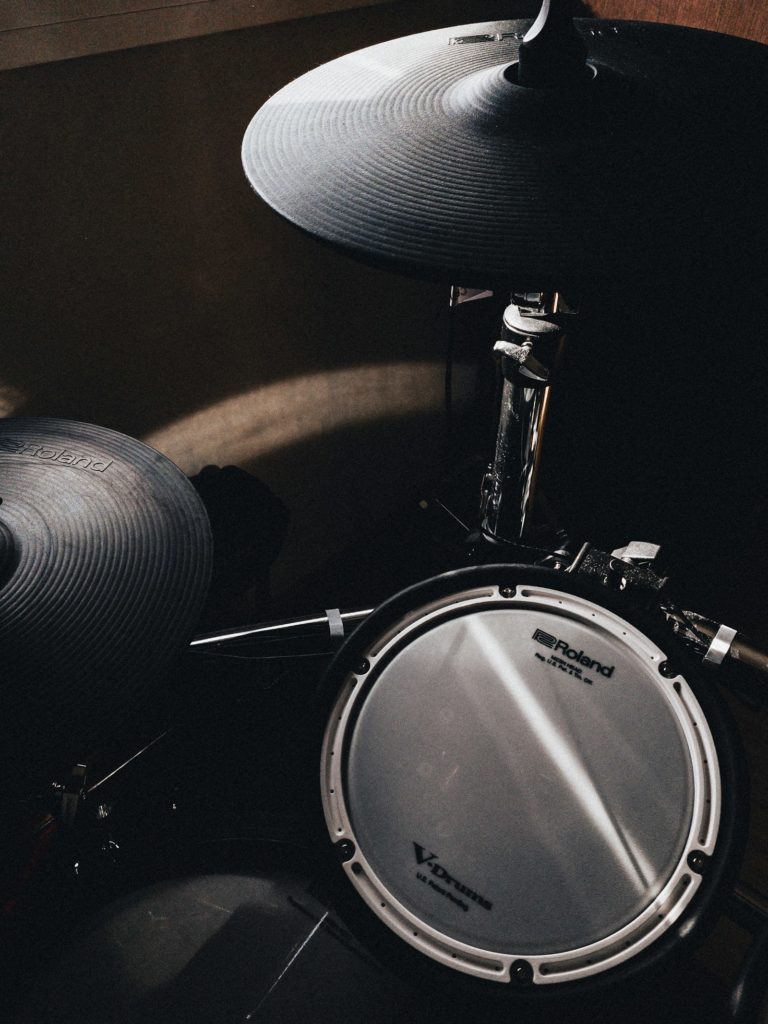
- Mesh heads feel close to the rebound of a real drumhead and are much quieter under the stick. Many can be tensioned, like a real drum.
- Rubber pads are harder, louder and bouncier, which slightly distorts how you develop your hand technique.
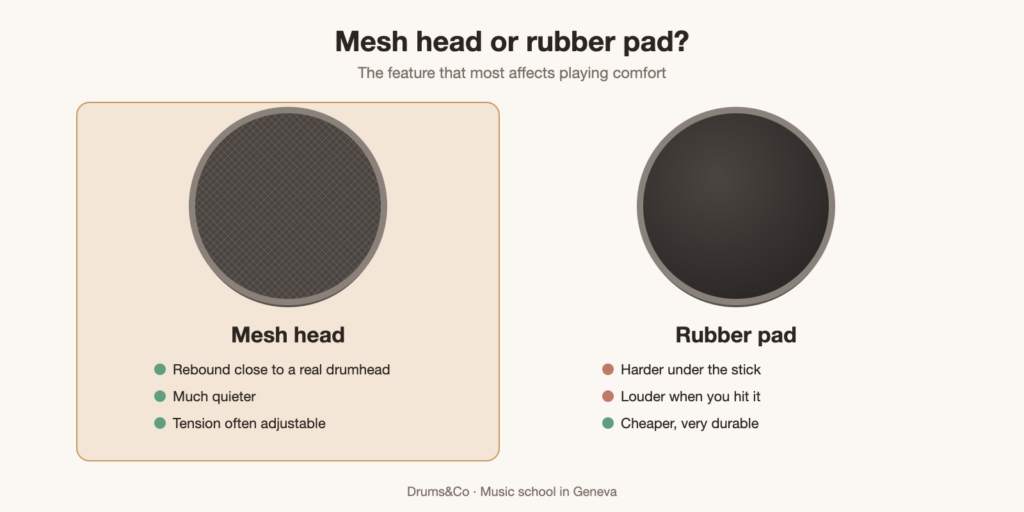
Our advice: choose mesh heads, at least for the snare. It’s the pad you’ll play most.
2. The module
The module is the kit’s “brain”. Beginners don’t need hundreds of sounds. Check instead that it offers:
- an easy-to-set metronome;
- exercises or a coach mode to work on your timing;
- an audio input or Bluetooth to play along to songs;
- a USB port to record or use an app.
3. The hi-hat
On the cheapest kits, the hi-hat is a simple pad with a small floor pedal. On more advanced models, it mounts on a real stand and opens and closes like a real cymbal. A hi-hat pedal that lets you open it gradually is a real plus for learning rock and funk grooves.
4. The kick drum
Some electronic kits have no kick pad, just a pedal that strikes nothing. It’s practical and quiet, but it feels different. A kick pad with a real pedal lets you develop your foot technique as on an acoustic kit, and switch between the two easily.
5. Size and upgrades
- Pad size: larger pads are easier to hit and closer to a real kit.
- Number of cymbals: hi-hat, crash and ride are enough for beginners.
- Spare inputs on the module: they let you add a tom or a cymbal later.
- Adjustable height for the rack and snare, especially if several people in the family play.
What budget should you plan for?
The prices below are approximate figures seen in late 2026, for a complete kit without stool or headphones. The models listed are examples: ranges change regularly.
| Approximate budget | What you get | Example models |
|---|---|---|
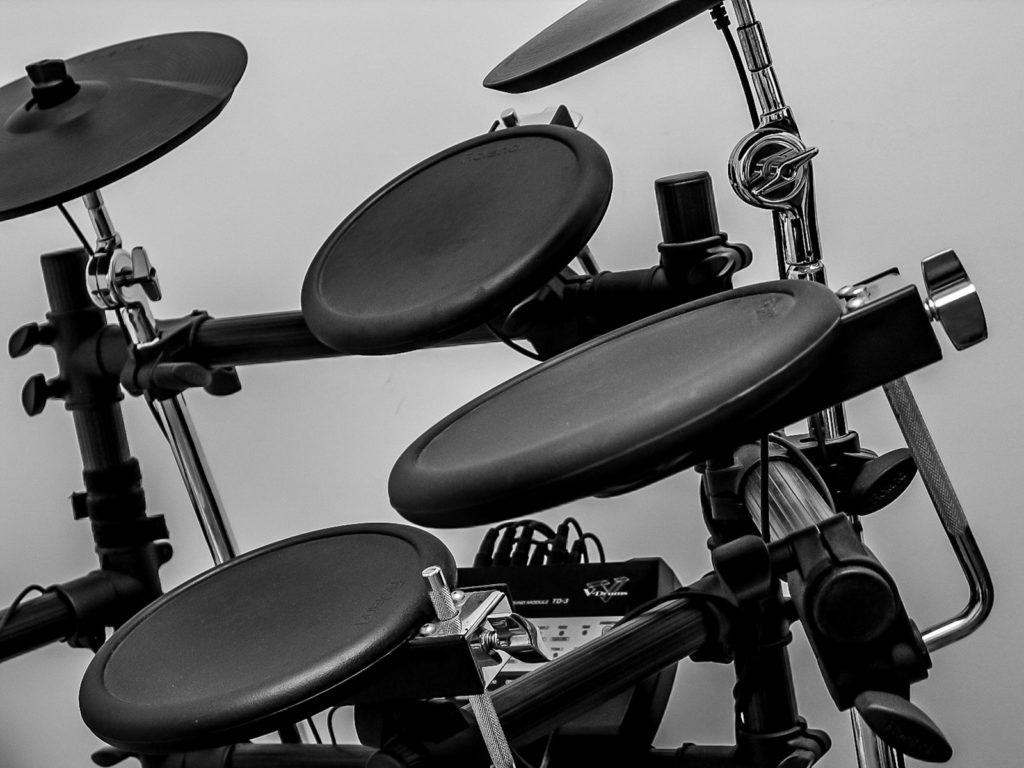
| About CHF 250 to 500 | Starter kits, small pads (often rubber, sometimes mesh), simplified hi-hat, kick pedal without pad | Alesis Debut Kit and Nitro Max, Roland TD-02K and TD-02KV, Yamaha DTX402K |
| About CHF 600 to 1,100 | Our pick for serious beginners: mesh heads, a better module, often a real kick pad | Roland TD-07KV and TD-07DMK, Yamaha DTX6K-X, Alesis Nitro Pro |
| About CHF 1,400 to 2,000 | Larger pads, hi-hat on a stand, much more realistic sounds and dynamics | Roland TD-313, TD-316 and VQD106 (quiet version), Alesis Crimson III and Strata Club |
| From CHF 2,500 | High end: full-size shells, the look of an acoustic kit, for stage and studio | Roland VAD, Yamaha DTX10, Efnote |
Also budget for accessories, which are often extra: an adjustable stool (essential for good posture), closed-back headphones, drumsticks (see our article Which drumsticks should you choose as a beginner?) and, if needed, an anti-vibration mat.
A second-hand electronic kit can also be a good deal. Just check that every pad responds, that the cables are included and that the mesh heads aren’t torn.
Which brands should you choose?
Four brands make most of the electronic drum kits you’ll come across:
| Brand | Origin | What to know |
|---|---|---|
| Roland | Japan | The historic reference with its V-Drums range, from starter kits to high end. Modules known for their built-in exercises. |
| Yamaha | Japan | Very reliable DTX range, with good learning tools and compact kits. |
| Alesis | United States | Great value for money, often with mesh heads even on entry-level kits. |
| Efnote | Japan | Brand founded in 2018 in Hamamatsu, focusing on kits that look and feel close to acoustic drums. |
Playing in a flat: noise and neighbours
This is often the number one reason to choose an electronic kit. But be careful: with headphones on, you hear almost nothing… your neighbours, however, hear the strokes. Especially the one downstairs.
- The kick drum is the main source of noise: each pedal stroke travels through the floor and the building’s structure.
- Mesh pads are quieter than rubber pads under the stick.
To reduce noise:
- Put the kit on a thick rug or, better, on an anti-vibration platform (foam blocks or tennis balls under a board, for example).
- Keep it away from shared walls.
- Choose a quiet kick pedal, or a kit with a padless pedal for late sessions.
- Talk to your neighbours and agree on playing times. Also check your building’s rules.
The quietest option: the Roland VQD106
If noise is your main concern, Roland has a range designed specifically for it: V-Drums Quiet Design. According to the manufacturer’s tests, the VQD106 kit reduces playing noise by about 75% compared with a conventional V-Drums kit.
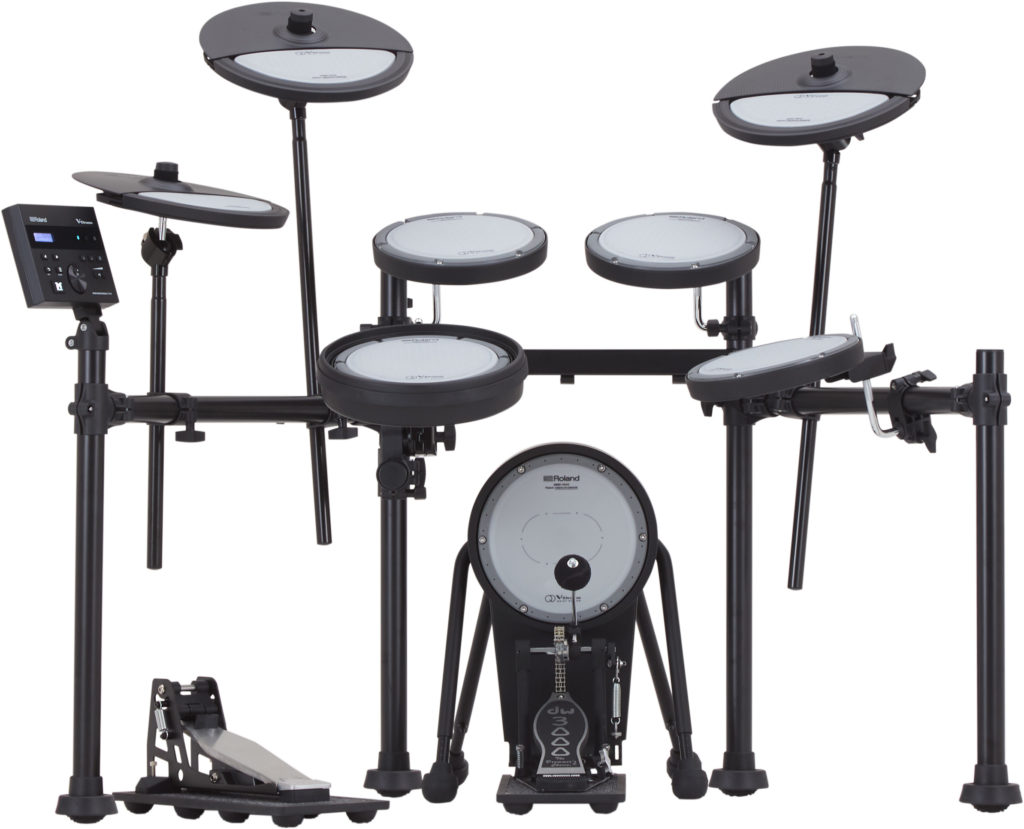
What makes it so quiet:
- specially designed pads that reduce stroke noise while keeping a good rebound under the stick;
- a quiet, rounded kick beater that makes much less noise on impact;
- pedal bases and a rack with rubber feet that stop vibrations from travelling into the floor and to your neighbours.
It comes with the TD-07 module, the same as on Roland’s mid-range kits, with metronome, exercises and Bluetooth. Note that the kick pedal isn’t included and must be bought separately. Expect to pay around 2,000 francs for the kit, which puts it in the upper range.
Already own a Roland kit? Quiet Design components are also sold individually, or as a set without module (VQD106PADS), to make your current kit quieter.
To see the VQD106 in photos and video: official Roland VQD106 page.
And to play as much as you like, school students get free access to our three practice rooms all week.
Our recommendations by profile
| Profile | Our advice |
|---|---|
| Child discovering the drums | A compact starter kit (CHF 250 to 500) with a mesh snare and adjustable height |
| Teen or adult taking lessons | A mid-range kit (CHF 600 to 1,100): mesh heads, real kick pad, module with exercises |
| Drummer who wants to play in a band or record | A kit with a hi-hat on a stand, large pads and USB (from about CHF 1,400) |
| Flat with close neighbours | Mesh heads throughout, anti-vibration platform under the kick |
Whatever your situation, talk to your teacher before buying. At Drums&Co, our teachers help you work out what you really need, based on your level, your home and your budget.
Frequently asked questions
Can you learn drums on an electronic kit alone?
Yes, to get started and to practise at home. But the feel and dynamics are different: playing an acoustic kit regularly, in lessons or a rehearsal room, is still important to progress.
Is an electronic drum kit silent?
No. With headphones, the drum sounds stay in your ears, but strokes on the pads and especially the kick pedal can be heard and travel through the floor. A thick rug or an anti-vibration platform makes a big difference.
Do you need special drumsticks?
No, regular sticks are fine. Nylon tips wear more slowly on rubber pads and cymbals.
Do you need an amp?
Not to start: good closed-back headphones are enough. An electronic drum amp becomes useful when you play with other musicians.
Ready to get started?
At Drums&Co in Geneva, we welcome drummers from age 6, with no upper age limit, in private or group lessons. No kit at home yet? Our students can practise for free in our three practice rooms all week while they choose the right instrument.
Discover our drum lessons · Rates and registration
Also worth reading: Which drumsticks should you choose as a beginner?
Written by Ismaël Rodriguez, drum teacher at Drums&Co in Geneva.